Tuesday, September 27

Lê Đức Thọ


Lê Đức Thọ (October 14, 1911 – October 13, 1990) was a Vietnamese revolutionary, general, diplomat, and politician, who was awarded the Nobel Peace Prize jointly with United States Secretary of State Henry Kissinger in 1973.

The United States actively joined the Vietnam War during the early 1960s. Several rounds of Paris Peace Talks (some public, some secret) were held between 1969 and 1973. While Xuan Thuy led the official negotiating team representing the Democratic Republic of Vietnam at the talks in Paris, Thọ and U.S. National Security Advisor Henry Kissinger since February 1970 engaged in secret talks that eventually led to a cease-fire in the Paris Peace Accords of January 23, 1973. The basic history of the Accords included: release of POWs within 80 days; ceasefire to be monitored by the International Commission of Control and Supervision (ICC); free and democratic elections to be held in South Vietnam; U.S. aid to South Vietnam would continue; DRV troops could remain in South Vietnam.

While January 23 is generally recognized as the enactment date of the Peace Accords, the talks continued out of necessity. Sporadic fighting continued in some regions. While U.S. ground forces were removed by March 29, bombing continued in North Vietnam. Due to continued allegations of ceasefire violations by all sides, Kissinger and Lê Đức Thọ met in Paris in May and June 1973 for the purpose of getting the implementation of the peace agreement back on track. On June 13, 1973, the United States and the DRV signed a joint communique pledging mutual support for full implementation of the Paris Accords.


Lê Đức Thọ and Henry Kissinger were jointly awarded the 1973 Nobel Peace Prize for their efforts in negotiating the Paris Peace Accords.When Henry Kissinger was announced to be awarded the Peace Prize two of the Norwegian Nobel Committee members resigned in protest. However, Thọ declined to accept the award and the prize money, stating:

"There was never a peace deal with the U.S. We won the war".

Thursday, September 15

François al-Hajj Commander of Maghaweer

General François al-Hajj was born in the southern Lebanese town of Rmaich. He was assassinated by a car bomb on December 12, 2007. The killing reverberated far beyond Lebanon. Condemnations poured in from the United States, Iran, Syria, France and Germany. Factions from across the Lebanese spectrum deplored the assassination, including Hezbollah, which called it a “great national loss.”

July 28, 1953 – December 12, 2007 (aged 54)


  • Place of birth: Rmaich – Qadaa of Bint Jbeil 
  • Place of death – Baabda
  • Resting place – Rmaich 
  • Allegiance – Lebanon 
  • Service/branch – Lebanese Armed Forces 
  • Years of service – 1972 - 2007 
  • Rank – Major General
  • Commands held 
Commando Regiment (1996 - 2002)
Third Intervention Regiment (1992 - 1996) 
  • Battles/wars 
Operation Nahr el-Bared
Operation Dinnieh
Liberation War
Israeli occupation in South Lebanon


He entered the military academy in 1972, graduating in 1975. He fought against the Israeli occupation in South Lebanon and was then transferred to head positions north of the Litani during the 1980s. In 1988-89 he fought against Syrian forces assaulting the “free zones” of West Beirut during the Lebanese Civil War, he also battled the Lebanese Forces militia. In addition, General Hajj, led the Lebanese Army operation in Dinnieh during 2000. He gained recognition as a brilliant commander during the 15-week operation against Fatah al-Islam in Nahr al-Bared camp northern Lebanon during Summer 2007. He was a supporter of General Michel Aoun, a Catholic Maronite, that in 2006 allied with Hezbollah to push for a strategy of "war against corruption".


General Francois Hajj received the following honors and medals:

Medal of War
Order of the Wounded
Lebanese Order of Merit (3rd degree)
Order of National Unity
Order of the Dawn of the South
Lebanese Order of Merit (1st class)
National Cedar Medal
Medal of Loyalty
Cedar Medal of National Honor
Commended by the Army Commander over 24 times

Monday, September 12

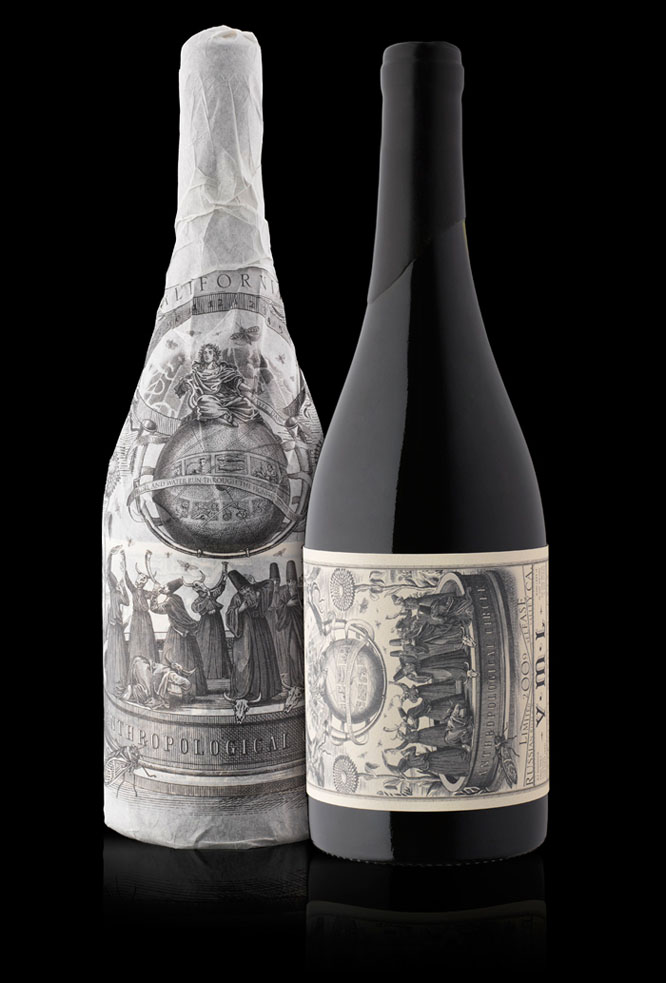
Wine Label Design

Age appears to be best in four things; old wood best to burn, old wine to drink, old friends to trust, and old authors to read. Francis Bacon


Tuesday, May 24

Longest recorded sniper kills


1. Corporal of Horse (CoH) Craig Harrison (UK) - 2,475 m

In November 2009 CoH Craig Harrison struck two Taliban machine gunners south of Musa Qala in Helmand Province in Afghanistan at a range of 2,475 m (2,707 yd) using a L115A3 Long Range Rifle. In the reports CoH Craig Harrison mentions the environmental conditions were perfect for long range shooting: no wind, mild weather, clear visibility.


2. Corporal Rob Furlong (Canada) - 2,430 m

In March 2002, Furlong participated in Operation Anaconda in Afghanistan's Shah-i-Kot Valley as a member of the 3rd Battalion of Princess Patricia's Canadian Light Infantry (PPCLI). A group of three al-Qaeda fighters were moving into a mountainside position when Furlong took aim with his Long Range Sniper Weapon (LRSW), a .50-caliber McMillan Brothers Tac-50 rifle and ammunition loaded with 750 gr Hornady A-MAX very-low-drag bullets. He began firing at a fighter carrying an RPK machine gun. His first shot missed and his second shot hit the knapsack on the target's back. The third struck the target's torso, killing him. The distance was measured as 2,430 metres (2,657 yd / 1.509 miles). With a muzzle speed of 823 m/s (2,700 ft/s), each shot reached the target almost four seconds after Furlong fired.

3. Master Corporal Arron Perry (Canada) - 2,310 m

Former Master Corporal in the Canadian Forces who in March 2002 briefly held the record for the longest recorded sniper kill in combat at a range of 2,310 m (2,526 yd).

Saturday, May 21

Blood brotherhood


Blood brother can refer to one of two things: two males related by birth, or two or more men not related by birth who have sworn loyalty to each other. This is usually done in a ceremony, known as a blood oath, where the blood of each man is mingled together. The process usually provides a participant with a heightened symbolic sense of attachment with another participant.


An oath is either a statement of fact or a promise calling upon something or someone that the oath maker considers sacred, usually God, as a witness to the binding nature of the promise or the truth of the statement of fact. To swear is to take an oath, to make a solemn vow.
The essence of a divine oath is an invocation of divine agency to be a guarantor of the oath taker's own honesty and integrity in the matter under question. By implication, this invokes divine displeasure if the oath taker fails in their sworn duties. It therefore implies greater care than usual in the act of the performance of one's duty, such as in testimony to the facts of the matter in a court of law.
A person taking an oath indicates this in a number of ways. The most usual is the explicit "I swear," but any statement or promise that includes "with * as my witness" or "so help me *," with '*' being something or someone the oath-taker holds sacred, is an oath. Many people take an oath by holding in their hand or placing over their head a book of scripture or a sacred object, thus indicating the sacred witness through their action: such an oath is called corporal. However, the chief purpose of such an act is for ceremony or solemnity, and the act does not of itself make an oath.

Monday, May 2

Tea Makers and Coffee Machines


In 1822, the first espresso machine was made in France. In 1933, Dr. Ernest Illy invented the first automatic espresso machine. However, the modern-day espresso machine was created by Italian Achilles Gaggia in 1946. Gaggia invented a high pressure espresso machine by using a spring powered lever system. The first pump driven espresso machine was produced in 1960 by the Faema company.


Traditionally the tea is served three times, and the amount of time the tea has been steeping gives each of the three glasses of tea a unique flavor, described in this famous proverb:

Le premier verre est aussi amer que la vie,
le deuxième est aussi fort que l'amour,
le troisième est aussi doux que la mort.

The first glass is as bitter as life,
the second glass is as strong as love,
the third glass is as gentle as death.


The cultivation and brewing of tea in India has a long history of applications in traditional systems of medicine and for consumption. The consumption of tea in India was first clearly documented in the Ramayana (750-500 BC). For the next 1000 years, documentation of tea in India was lost in history. Records re-emerge during the 1st century AD, with stories of the Buddhist monks Bodhidharma and Gan Lu, and their involvement with tea. Research shows that tea is indigenous to eastern and northern India, and was cultivated and consumed there for thousands of years. Commercial production of tea in India did not begin until the arrival of the British East India Company, at which point large tracts of land were converted for mass tea production.


Moroccan mint tea is a green tea with mint leaves.
Moroccan-style mint tea is now commonly served all through the West Arab World (North Africa). It is served not only at mealtimes but all through the day, and it is especially a drink of hospitality, commonly served whenever there are guests. Unlike Moroccan food, cooked by women, this tea is traditionally a man's affair: prepared by the head of the family. It is served to guests, and it is impolite to refuse it.


The first great coffeemaker 1927

In 1927 the first large coffee machine from WMF heralded a technical revolution. It worked with vapour pressure and was the machine where the parts directly getting into contact with coffee were made of Cromargan. The strong points of the machine were its fastness and its ease of operation. This machine already applied two brewing processes: the pressureless brewing process and the “express” process working with pressure and being distinctly faster.